Need help or have a question?
Contact us at: service@jingci.shop


Famille Rose Porcelain

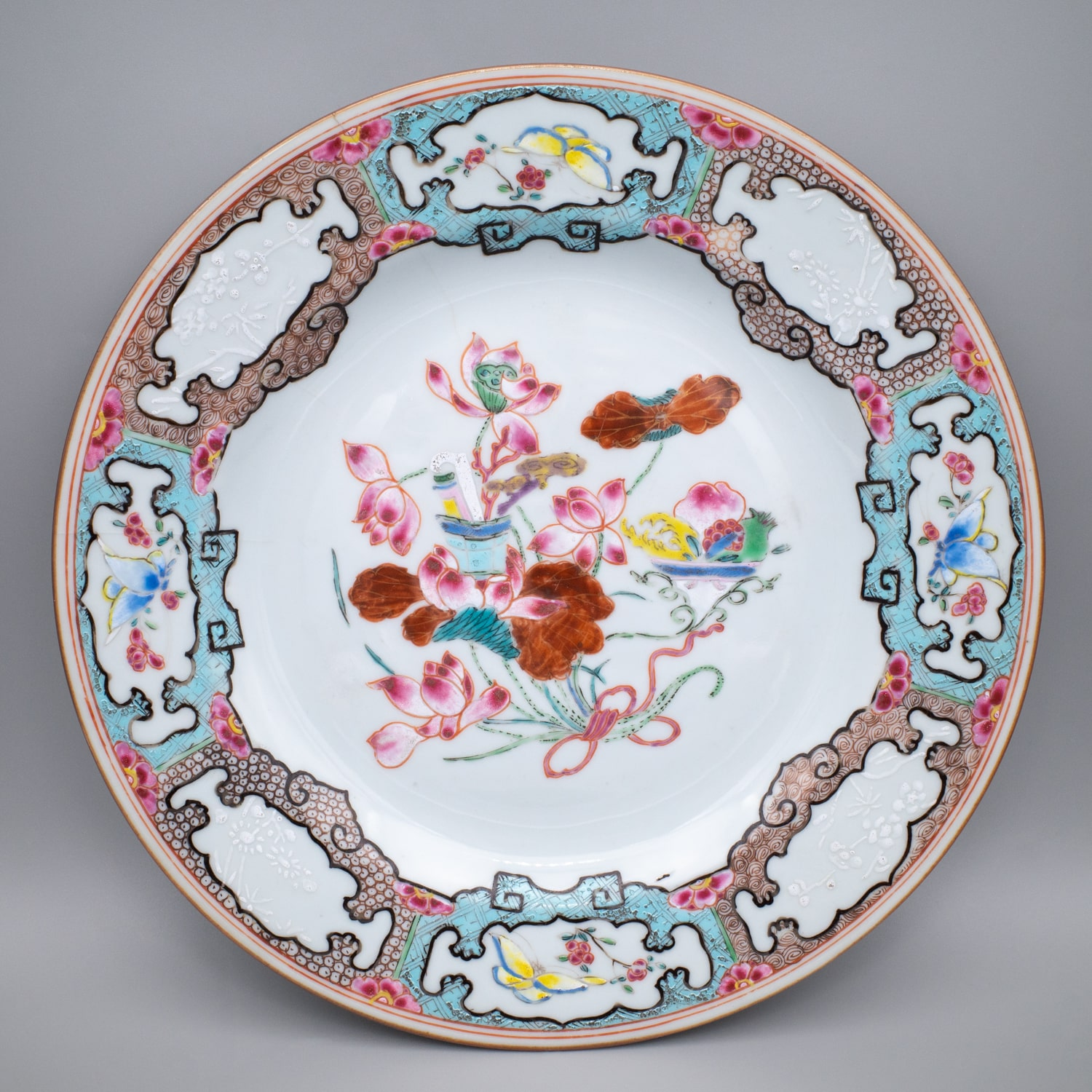
Famille rose (fencai) employs pink-toned overglaze enamels mixed with lead arsenate to create soft color gradients. Developed in early 18th-century China, this technique enabled Western-style perspective and shading in ceramic painting, revolutionizing decorative arts.
Technical Breakthroughs
Introduced during the Kangxi period (1662–1722), famille rose uses:
- “Foreign colors” (falangcai) incorporating Western enamel technology
- Layered application to achieve three-dimensional effects
- Gold powder additions for metallic highlights
Imperial Patronage
Yongzheng Emperor’s (1723–1735) obsession with technical perfection led to famille rose becoming the official court porcelain. The Qianlong period saw increasingly elaborate designs, including the “Hundred Deer” vases that symbolized imperial longevity.
Global Collections
The British Museum’s famille rose peach vase (1736–1795) exemplifies the technique’s blend of Chinese motifs (peaches for immortality) with Western painting techniques. Such pieces fueled Europe’s “chinoiserie” craze, influencing everything from furniture design to tapestries.