Need help or have a question?
Contact us at: service@jingci.shop


Blue and White Porcelain

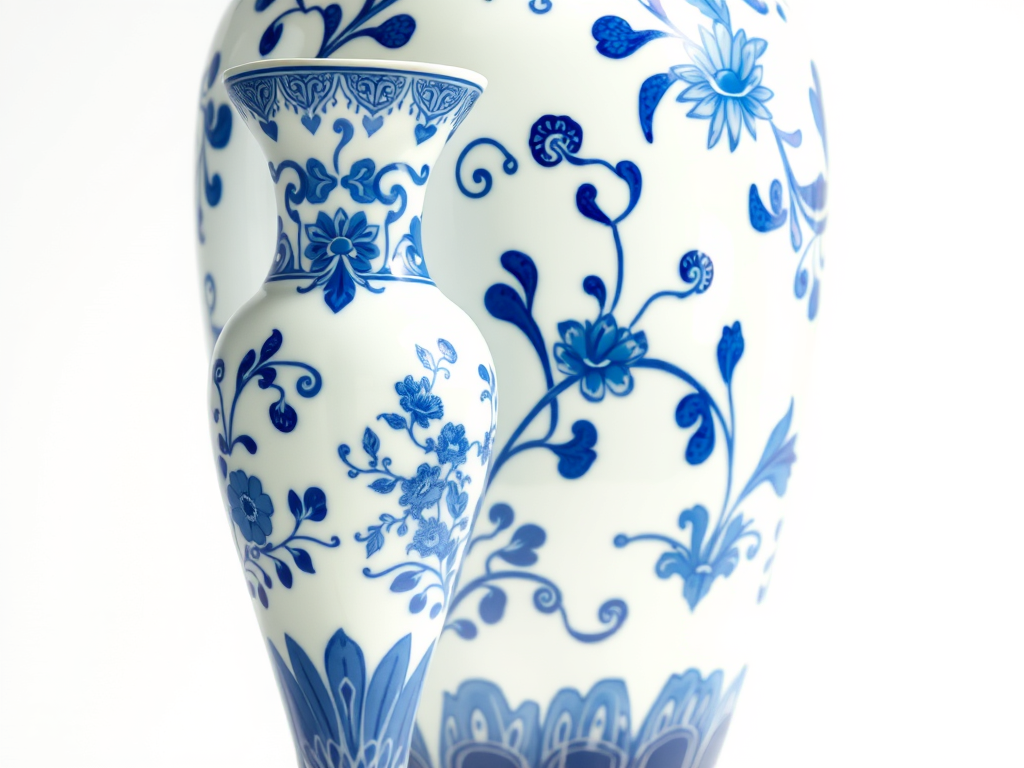
Blue and white porcelain features white clay bodies decorated with cobalt oxide under a transparent glaze, fired at temperatures exceeding 1300°C. This technique produces a striking contrast between vivid blue imagery and pristine white ground, with designs ranging from floral scrolls to historical narratives.
Global Influence
Introduced to Europe via the Dutch East India Company in the 17th century, blue and white porcelain triggered a “china craze” that transformed European dining habits and interior design. Factories in Delft (Netherlands) and Worcester (England) spent decades attempting to replicate its formula.
Technical Evolution
- Yuan Dynasty (1271–1368): Imported Persian cobalt created rich “sapphire blue”
- Ming Xuande period: Developed “heaped and piled” cobalt effects
- Qing Kangxi era: Perfected color gradation techniques
Iconic Works
The National Palace Museum’s “David Vases” (1351) bear the earliest dated underglaze blue decoration. These temple offerings demonstrate how blue and white porcelain became both a religious artifact and a vehicle for cultural exchange along the Silk Road.