Need help or have a question?
Contact us at: service@jingci.shop


Overglaze Decoration

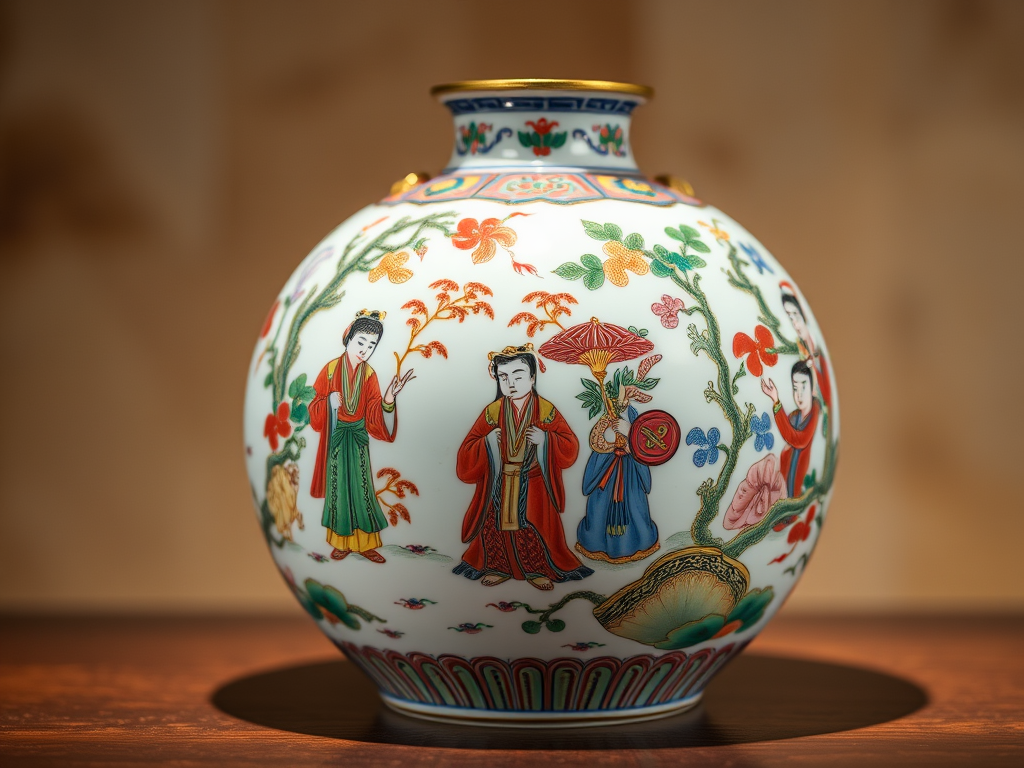
Overglaze decoration involves applying colored enamels to already glazed and fired ceramics, followed by a second low-temperature firing (600–900°C). This technique enables a wider color palette than underglaze methods, with pigments suspended in a glassy medium that fuses to the glaze surface.
Historical Development
Originating in 12th-century Persian Mina’i ware, the technique was adopted in China during the Ming Dynasty (1368–1644). European Jesuit missionaries later introduced Western enamel formulas, leading to Qing Dynasty innovations like famille rose porcelain. The method spread to Japan (Nabeshima ware) and Europe, influencing Meissen and Sevres factories.
Technical Distinctions
- Uses lead arsenate “glassy white” (boli bai) to create color gradients
- Enables intricate figural scenes and metallic gold accents
- Notable for its tactile quality; decorations often slightly rise above the glaze surface
Artistic Significance
Overglaze enamels transformed ceramic art from monochromatic elegance to polychromatic storytelling. The Victoria and Albert Museum’s Yongzheng period famille rose moon flask exemplifies how imperial workshops used these techniques to blend Chinese motifs with Western perspective.